When the Sea Doesn’t Split Yet
Parshas Beshalach’s call to keep walking, until faith becomes a pathway, and song becomes strength
Thank you for subscribing
Thank you for subscribing
Thank you for subscribing



Parshas Beshalach is the moment everyone dreams of, and the moment most people fear.
It’s the week of miracles: the sea splits, the impossible becomes navigable, and a nation learns how to sing again. But it’s also the week of pressure: the Egyptians behind them, the water in front of them, panic in the air, and the question that still follows us today:
What do you do when you’re trapped between what’s chasing you and what you can’t yet cross?
There’s a striking line in the story at the sea. Moshe cries out, and Hashem responds (in essence): Don’t freeze in prayer alone - move. This isn’t a dismissal of tefillah. It’s a demand that tefillah lead somewhere.
Chassidus emphasizes a powerful rhythm here:
First, you turn to Hashem.
Then you take the next step you’re capable of taking.
And only then do you discover that the step itself was the opening.
In the Beshalach narrative, the sea doesn’t split as a “theoretical idea.” It splits as a lived decision, a forward motion when forward motion feels unreasonable.
That’s why the Torah highlights Nachshon ben Aminadav: the one who entered the water first, before the miracle was visible. His story became a symbol of courage not fueled by certainty but by responsibility.
We call it Shiras HaYam, “The Song at the Sea,” but it’s more than a song. It’s the moment a broken people regains spiritual language.
And Chabad teachings point out something subtle: “Az yashir Moshe” is written in a form that hints at the future - Moshe will sing - linking this ancient song to the future redemption. In other words, the song at the sea is not only a reaction to what happened then; it’s a rehearsal for what will be revealed later.
So Beshalach is teaching us:
There are moments when survival requires grit.
And there are moments when survival requires song, not because everything is okay, but because your soul refuses to be reduced to fear.
Right after the sea, the Torah shifts quickly: hunger, thirst, uncertainty. The supernatural becomes daily logistics.
Hashem sends manna, but with structure: gather what you need, don’t hoard, prepare for Shabbos. Beshalach introduces a holy kind of routine: faith that shows up on Tuesday, not only at the sea.
This is often where modern life lives:
Not in the grand miracle, but in the daily decision to stay upright, stay kind, stay steady, and keep serving.
Then comes Amalek, an enemy that doesn’t just attack the body; it attacks the spirit. Chassidic teachings describe Amalek as the force that cools you down—turning a moment of holiness into cynicism, doubt, and emotional numbness.
In plain language: Amalek is the voice that says,
“Don’t feel too much. Don’t believe too much. Don’t care too much.”
And the Torah’s response is not only to fight Amalek “out there” but also to fight the Amalek within, the inner coldness that makes a person stop moving, stop singing, and stop hoping.
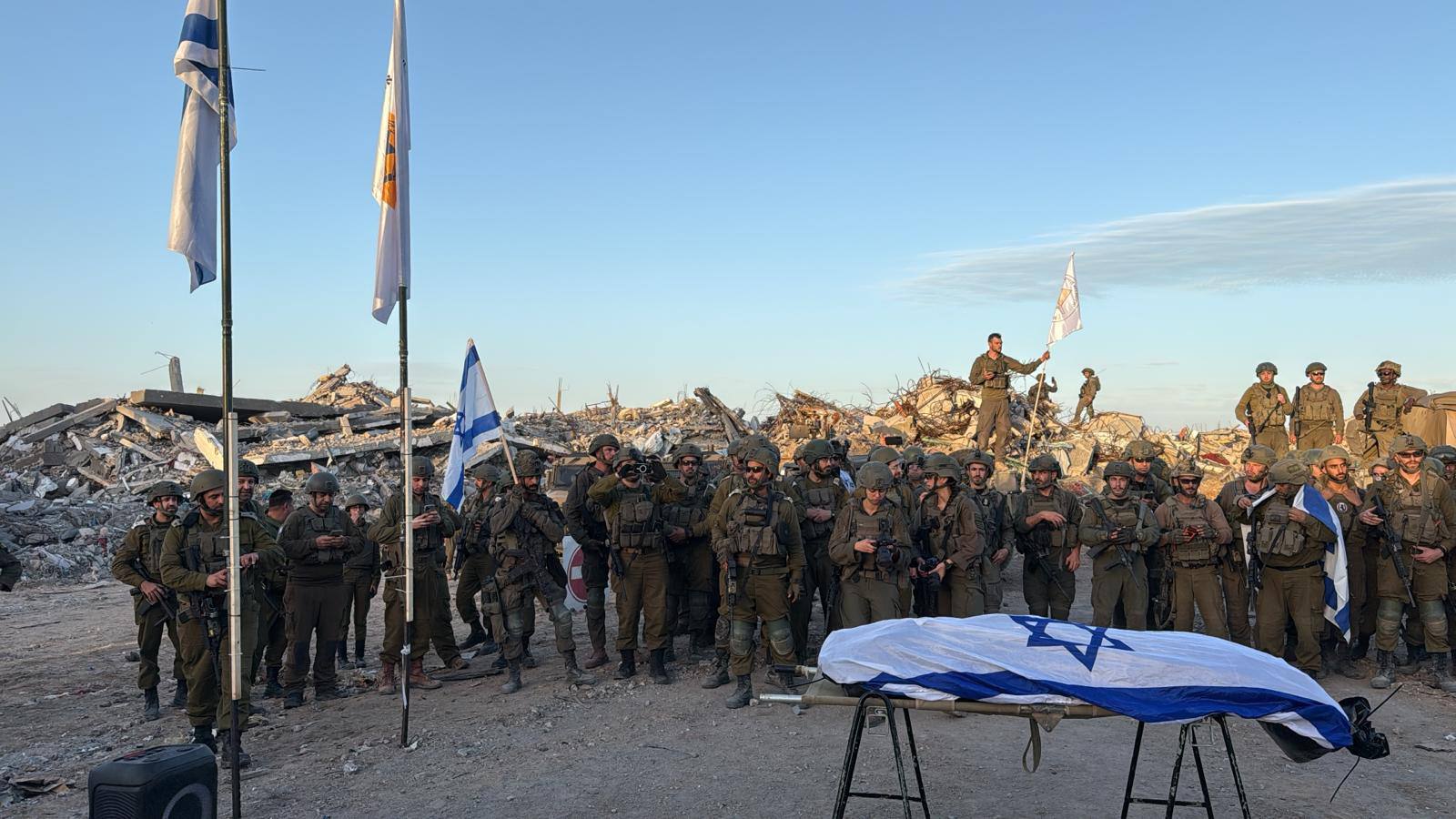
This week, many of us felt a national weight shift with the return of the last hostage for burial: Ran (“Rani”) Gvili. He was an Israeli Police officer who was killed during the October 7 attack and whose body was taken into Gaza, now finally returned to Israel, allowing his family and nation to bring him to burial with dignity.
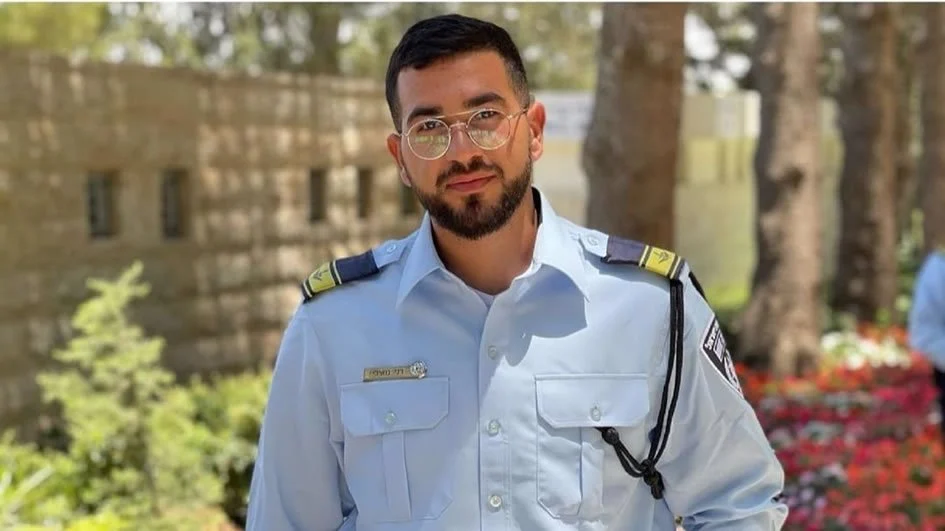
There is something profoundly Beshalach about that moment.
Because Beshalach is about the difference between “not yet” and “never.”
The sea is closed until it isn’t.
The voice is stuck until it sings.
The heart is frozen until it moves.
And sometimes, the “split sea” is not a spectacle. Sometimes it is the quiet, painful mercy of closure:
A return. A burial. A final act of honor to someone who went in first to protect others.
In Jewish life, burial is not merely a procedure. It is kavod hameis - dignity for the departed and comfort for the living. It is the community saying, "You were not forgotten. You are not alone. You are home."
If Beshalach teaches us to keep walking even when the sea hasn’t split yet, then this return reminds us:
Even when the journey is long, sometimes unimaginably so, we do not stop bringing our people home.
If you’re facing a “sea” of your own right now, such as fear, uncertainty, fatigue, and grief, Beshalach offers a three-part path:
Take one step forward that you can honestly take.
Warm the heart where it has gotten cold.
Sing even if the song begins as a whisper.
And may we merit the day when the world itself will sing the final song, when tears are replaced with healing, and every soul is returned to peace.
As part of SoulLinks ongoing commitment to bringing light into moments of darkness, we are honored to share the Spread Rose’s Light initiative.
This initiative was created in memory of Staff Sergeant Rose Rubin HY”D, whose life of courage, service, and quiet strength continues to inspire so many. In her memory, we chose to focus on the mitzvah of lighting Shabbat candles, a simple, timeless act that brings peace, warmth, and holiness into the world.

A single candle can illuminate an entire room, and adding light, especially in challenging times, is itself an act of resistance against darkness. In that spirit, these Shabbat candles are meant not only to honor Rose’s memory but to help spread her light outward, from home to home, heart to heart.
SoulLinks provides these Shabbat candle sets at no cost to organizations, agencies, and communities that wish to distribute them, particularly among Jewish service members, first responders, and families seeking connection and meaning.
If you or your organization would like to receive or help distribute Shabbat candle sets, or learn more about this initiative, please feel free to reach out to us at
[email protected]. We would be honored to coordinate with you.
May the light we add together bring comfort to those who grieve, strength to those who serve, and a world increasingly filled with peace.