Lech Lecha: The Courage to Keep Moving
Sometimes the road toward who we are meant to become begins before we can see where it is leading.
Thank you for subscribing
Thank you for subscribing
Thank you for subscribing


There are moments in life when the path ahead is clear. We know what is expected of us, we understand where we are going, and we can see the next step and perhaps even the one after that.
And then there are moments when none of that is true.
A career changes. A relationship shifts. A door closes unexpectedly. An opportunity appears that we never anticipated. A responsibility is placed upon us that we do not feel prepared to carry. Or life simply does not unfold according to the plan we had carefully constructed.
This is precisely where this week's Torah portion begins.
G-d tells Abraham (Avraham), "Lech lecha - Go forth from your land, from your birthplace, and from your father's house, to the land that I will show you."
Avraham is seventy-five years old. He has a home, a history, relationships, and an established life. Yet G-d asks him to leave the familiar behind. Remarkably, He does not initially tell Avraham where he is going.
He is simply told to begin the journey.
The words Lech Lecha literally mean "go for yourself." Chassidic teaching reveals a deeper message in these words: “go toward yourself - toward your truest self.”
Avraham's journey was therefore much more than geographical. He was being asked to move beyond the forces that had shaped and limited him: his environment, his upbringing, the assumptions of the society around him, and even the boundaries of his own understanding.
The Lubavitcher Rebbe explains that this is not only Avraham's story. It is the journey of every human being.
Over time, each of us accumulates definitions of ourselves. We begin to say, consciously or unconsciously: This is who I am. This is what I can handle. This is what I have always done. This is what people expect from me. This is as far as I can go.
Some of those definitions may accurately describe who we have been. But they do not necessarily define who we can become.
Lech Lecha is the call to keep moving beyond them.
Not recklessly. Not by abandoning our responsibilities or pretending real limitations don't exist. Rather, by refusing to confuse our present boundaries with our ultimate potential.
Sometimes the greatest obstacle to growth is not a lack of ability. It is that we have become too comfortable with an older version of ourselves.
There is another part of Avraham's story that makes this message far more powerful.
Avraham follows G-d's command. He leaves everything familiar and travels to the land G-d has shown him. He has listened. He has taken the risk. He has followed the call.
And almost immediately, there is a famine.
Avraham is forced to leave the very land G-d sent him to and descend to Egypt.
Imagine what that must have felt like. He had done what was asked of him, yet instead of the journey becoming clearer, everything seemed to be moving backward.
The Rebbe draws a profound lesson from this. Avraham's descent to Egypt was not ultimately outside his journey of Lech Lecha. It became part of it. What seemed like a setback in the moment was eventually revealed as another stage in his advancement.
That does not mean that every painful experience suddenly feels good, nor does faith require us to pretend that hardship is easy.
It means something much more honest:
A difficult chapter does not necessarily mean we have left the path.
Sometimes growth looks like progress. Sometimes it looks like struggle. Sometimes it looks like rebuilding. And sometimes it looks like simply putting one foot in front of the other when we cannot yet understand where the road is taking us.
Those who serve others often understand this especially well. Some calls stay with you, decisions carry weight, and some days the outcome isn't what you hoped for. Some moments leave you wondering whether you gave everything you had and still wonder if it was enough.
Lech Lecha reminds us not to judge the entire journey by one difficult stretch of road.
The chapter we never chose may still reveal strength, compassion, faith, resilience, or purpose we never knew we had.
But there is another crucial part of the story.
G-d does not tell Avraham merely to travel. He tells him, "And you shall be a blessing."
That may be the real test of growth.
The goal is not simply to discover ourselves. It is to ask what the person we are becoming can now give to someone else.
Avraham did not undertake his journey and retreat into private spirituality. He brought people with him. He taught. He cared. He influenced. He stood for truth in a world that often stood on the other side.
His inner journey produced an outward responsibility.
That remains true for us.
If an experience has made us more compassionate, someone should eventually experience that compassion. If hardship has taught us how much an encouraging word matters, someone should eventually hear that word from us. If we have been given influence, someone should benefit from it. If we have been given strength, someone who is struggling should feel a little safer because we are nearby.
If we have been blessed, then in some way, we are being asked to become a blessing.
This is especially meaningful in professions and communities built around service.
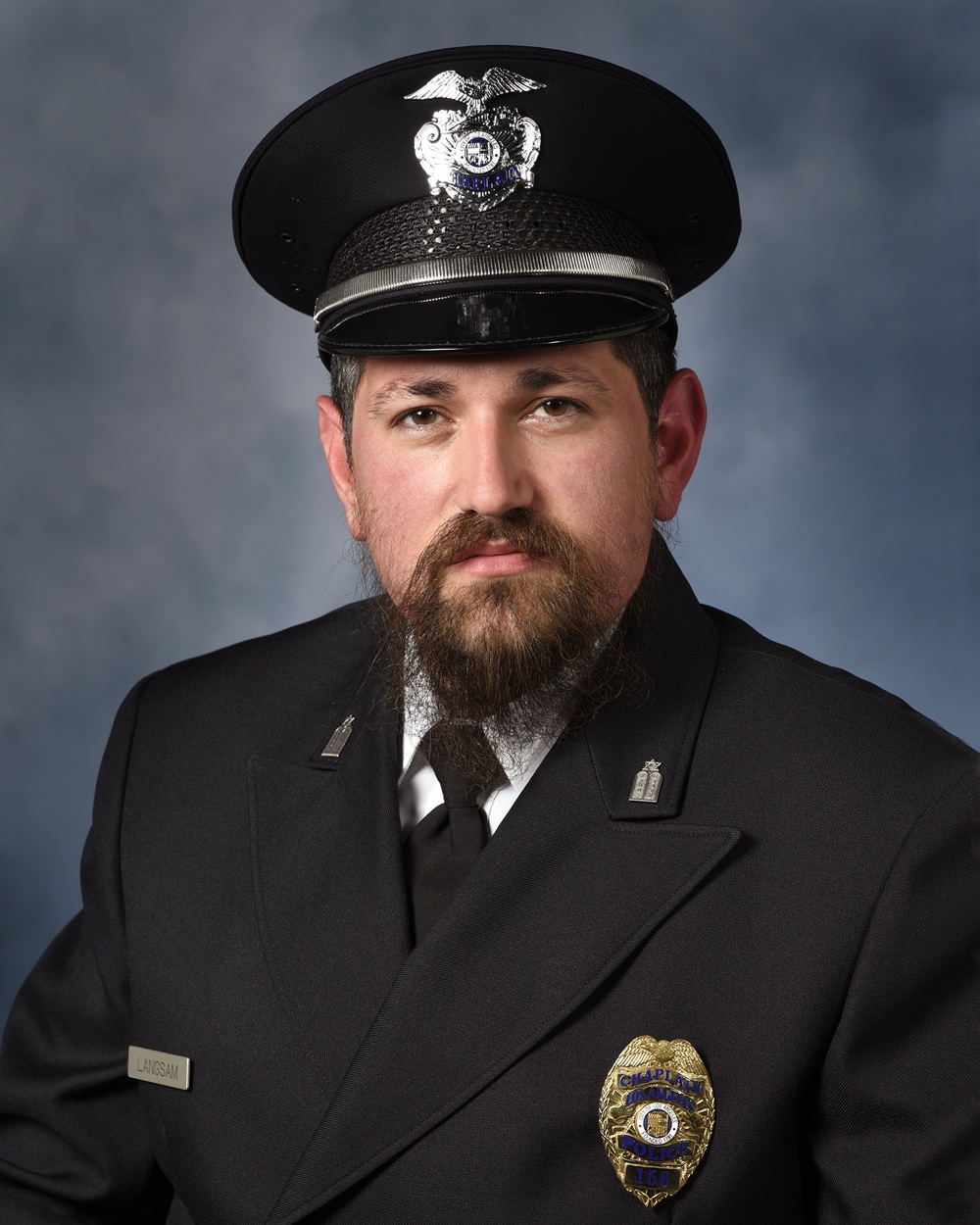
A uniform, badge, title, rank, or position may describe a role. But the role's deepest meaning comes from the human being inside it, the person who notices, who listens, who shows up, who protects dignity, who brings calm into chaos, and who remembers that behind every incident is a human life.
True growth is not measured only by what we achieve for ourselves. It is also measured by what becomes possible for others because of the person we have become.
Most of us would prefer that G-d show us the entire map.
Usually, He doesn't.
Avraham was given something else: a direction, a purpose, and the strength to begin.
Perhaps there is something in your own life that you know requires a next step. A conversation you have been postponing. A relationship that needs attention. A responsibility you know you should accept. A habit you need to change. Someone you should check on. An act of kindness you keep intending to do. A part of yourself you know you have outgrown.
You may not know exactly where that step will lead.
You do not have to.
Lech Lecha.
Take the next right step. Keep moving toward the person you were created to become.
And as you do, remember that the journey isn't complete when you discover something greater within yourself.
It becomes meaningful when someone else is blessed because you did.
Every day, first responders, law enforcement officers, military personnel, veterans, and their families dedicate themselves to serving and protecting others. SoulLinks helps serve those who serve.
By joining the SoulLinks Chai Club, your monthly support helps provide encouragement, spiritual care, meaningful connections, and critical resources to those who dedicate their lives to others.
A small act of generosity, repeated consistently, can create a lasting impact.
Tzedakah teaches us that giving is more than a single act; it is a commitment to bringing goodness into the lives of others. Through the SoulLinks Chai Club, that commitment becomes an ongoing source of support for the people and families who are so often there for us when we need them most.
Join the SoulLinks Chai Club today and help ensure that those who devote themselves to serving and protecting others know that they are supported, appreciated, and never alone.

"Serving Those Who Serve" - and strengthening the links that connect us all.