Thank you! Your submission has been received


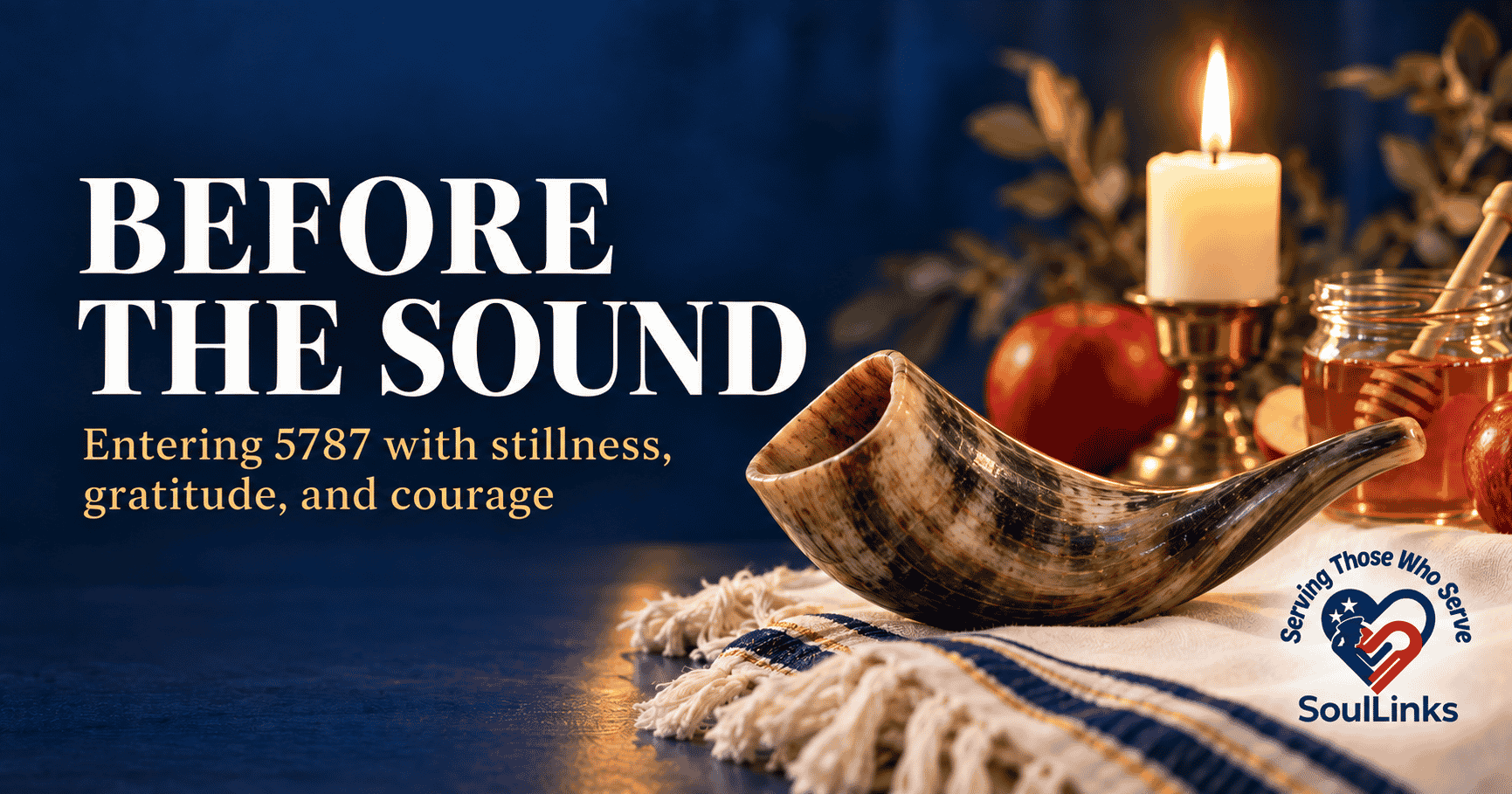
Most new years begin with noise.
Countdowns, celebrations, predictions, and ambitious lists of everything people hope to accomplish. Rosh Hashanah begins differently. It enters quietly, with candlelight, prayer, reflection, and the awareness that another precious year of life is beginning.
This year, that quiet is especially meaningful.
Rosh Hashanah begins before sunset on Friday, September 11, and continues through Sunday evening, September 13. Because the first day falls on Shabbos, the shofar is not sounded until Sunday.
Before the call comes the stillness.
Perhaps that is exactly how we need to enter 5787.
More Than the Beginning of a Year
Rosh Hashanah literally means “the head of the year.”
A head does more than begin the body. It directs it. It gives purpose, awareness, and direction to everything that follows. In the same way, Rosh Hashanah is not simply the first page of a new calendar. It is an opportunity to establish the spiritual direction of the entire year.
We pause before rushing forward.
We ask ourselves:
What guided me during the past year?
Where did I grow?
Who stood beside me?
Which blessings did I almost overlook?
What needs my attention before it becomes a crisis?
And, most importantly: Who do I want to become in the year ahead?
Rosh Hashanah does not ask us to pretend that the past year was perfect. It invites us to recognize that we are still here, still growing, and still able to choose what comes next.
Customs That Speak to the Soul
The customs of Rosh Hashanah are not merely beautiful traditions. Each one carries a message for how to enter the new year.
Lighting the Candles
Rosh Hashanah, like every major Jewish festival, begins with lighting candles. This year, because the holiday begins on Friday evening, the first lighting welcomes both the holiness of Shabbos and Rosh Hashanah into our homes. The candles honor the sacred day and create an atmosphere of light, peace, and harmony.
Just as a physical candle reveals what was already present in a room but concealed by darkness, the Shabbos candles reveal the G‑dliness hidden within our homes and within the world. The Lubavitcher Rebbe therefore encouraged every Jewish woman and girl to light Shabbos and holiday candles, emphasizing that when spiritual darkness increases, we must respond by adding spiritual light.
This teaching gives us direction as we enter 5787. We may not be able to solve every problem or carry every burden, but we must never underestimate the power of one Mitzvah. One candle can illuminate a room. One act of kindness can restore hope. One encouraging word can remind someone that they are not alone. Each of us can add light to the home, workplace, community, and lives that God has placed within our reach.
Apples and Honey
At the Rosh Hashanah meal, we dip a sweet apple into honey and ask God to renew for us a good and sweet year.
The custom carries meanings deeper than the sweetness of the food. The Talmud and Midrash teach that when Yaakov entered his father Yitzchak’s room to receive his blessings, the fragrance of the Garden of Eden accompanied him and was compared to the scent of an apple orchard. By eating the apple on Rosh Hashanah, we invoke the blessings received by Yaakov and pray that we, too, will be granted abundant blessing in the coming year.
Honey also represents the sweetness of Torah, as King Solomon declares, “Honey and milk are under your tongue.” The apple and honey therefore express more than a wish for pleasant experiences. They connect our hopes for the coming year with blessing, Torah, and closeness to God.
But the sweetness for which we pray must also influence the way we treat others. As we ask God for a sweet year, we can resolve to create more sweetness through the words we speak: offering encouragement instead of criticism, gratitude instead of entitlement, patience instead of frustration, and compassion to those carrying burdens we may not see.
May the sweetness we request from Above inspire the sweetness we bring into the lives of those around us.
Tashlich
This year, because the first day of Rosh Hashanah is Shabbos, we do the Tashlich on Sunday. We go to a body of water and recite prayers expressing our desire to leave our failures behind.
Tashlich is not about denying the past. It is about refusing to remain imprisoned by it.
We acknowledge where we fell short, take responsibility, and move forward. A mistake can become a teacher. A disappointment can deepen us. A difficult chapter does not need to become the title of our entire story.
God gives us the ability to begin again.
The Shofar
The central mitzvah of Rosh Hashanah is hearing the shofar. This year, we will sound it only on Sunday because we do not sound it when Rosh Hashanah falls on Shabbos.
The shofar delivers no polished speech. It has no complicated vocabulary. It is a raw and honest cry, a sound that reaches beneath appearances and awakens the deepest part of the soul.
It reminds us that beneath our roles, responsibilities, successes, and struggles, something within us remains pure and connected to God.
Sometimes transformation does not begin with having all the answers. It begins with becoming quiet enough to hear what our soul has been trying to tell us.
This year, the sequence itself carries a lesson:
First, be still.
Then, listen.
Then, respond.
Carrying the Lessons Forward
Over the past several weeks, the Torah has offered us a path toward this moment.
We learned to listen with compassion and make another person feel heard.
We learned to see with greater clarity and consciously choose blessing.
We learned that justice must be accompanied by humanity.
We learned to build guardrails before someone falls and to notice quiet struggles before they become emergencies.
We learned that ordinary battles can reveal extraordinary strength.
We learned to remember our blessings, acknowledge those who helped us, and say thank you.
And most recently, we learned that we must stand firmly in our values while continuing to move forward, one next step at a time.
Rosh Hashanah gathers all these lessons together and asks us to carry them into the coming year.
Not as inspiring thoughts that disappear when the holiday ends, but as choices that shape how we live.
One Honest Resolution
A new year often tempts us to create a long list of dramatic promises. But lasting change rarely begins with changing everything at once.
Choose one honest resolution.
One relationship that deserves more attention.
One blessing you will stop taking for granted.
One person you need to forgive, or ask forgiveness from.
One spiritual practice you will strengthen.
One daily act of kindness.
One boundary or guardrail that will protect what matters most.
One next right step.
A small resolution carried faithfully can direct an entire year, just as the head directs the body. The goal is not immediate perfection. The goal is sincere movement.
A Blessing for 5787
As we enter 5787, may God inscribe and seal each of us, our families, our communities, those who protect and serve, and people everywhere for a good and sweet year.
May it be a year of good health, peace, safety, prosperity, and revealed blessing.
May those carrying unseen burdens find comfort and support.
May those waiting for answers receive clarity.
May those who feel distant rediscover connection.
May our homes be filled with patience, faith, and joy.
May we recognize the blessings already present in our lives while remaining courageous enough to build an even better future.
And may we each discover the strength to become still, hear the call meant for us, and take the next right step.
L’shanah Tovah Tikateivu V’teichateimu! May you and your loved ones be written and sealed for a good and sweet new year.
Practical Rosh Hashanah Guide for 5787
Rosh Hashanah begins before sunset on Friday, September 11, 2026, and concludes after nightfall on Sunday, September 13, 2026.
Key observances include:
Lighting Shabbos and holiday candles before sunset on Friday. Consult your local calendar for the correct time.
Lighting the second night’s holiday candles after nightfall on Saturday, using a pre-existing flame.
Enjoying festive meals, including round challah dipped in honey and, traditionally, apple dipped in honey on the first evening.
Attending Rosh Hashanah prayer services.
Hearing the shofar on Sunday. Because the first day is Shabbos this year, the shofar is not sounded on Saturday.
Reciting Tashlich near a body of water on Sunday, since it is postponed from the first day this year.
Taking on a positive and practical resolution for the new year.
Local times vary. Click here to find your local time.
As we welcome the new year 5787, consider beginning it with one meaningful resolution that will continue making a difference throughout the year.
By joining the SoulLinks Chai Club, your monthly support helps provide encouragement, spiritual care, and critical resources to first responders, law enforcement, military personnel, veterans, and their families.
A small act of generosity, repeated consistently, can create a lasting impact.
Begin the new year with the enduring Mitzvah of Tzedakah. Join the Chai Club today and help ensure that those who devote themselves to serving others know they are never alone.
"Serving Those Who Serve" - and strengthening the links that connect us all.