Thank you! Your submission has been received

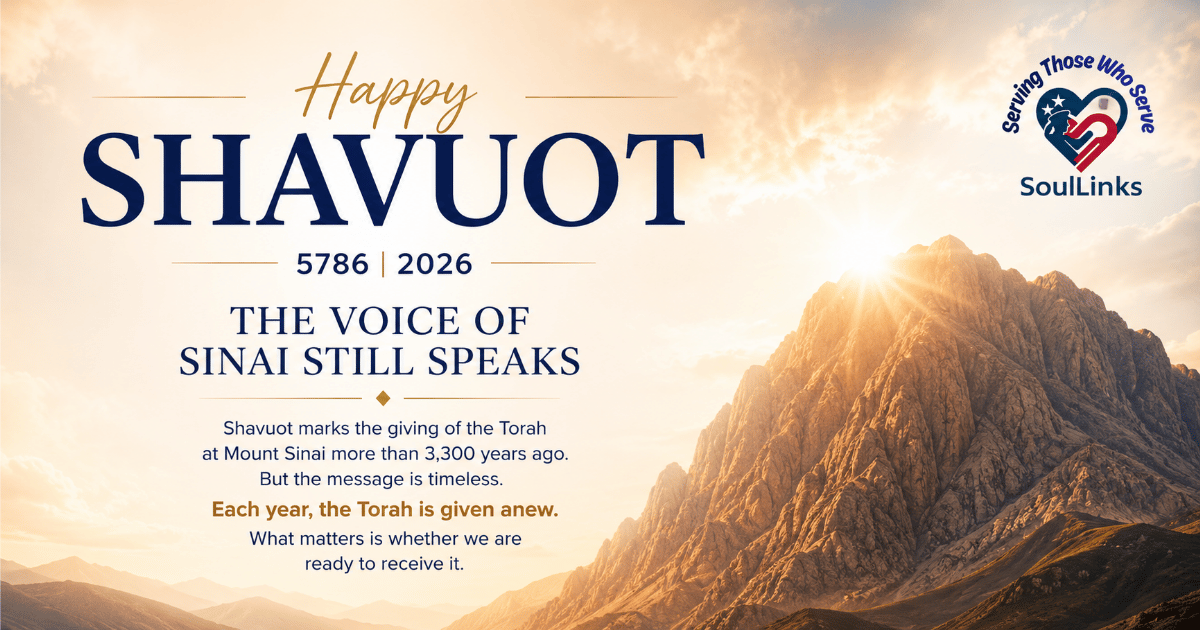
As the sun sets on Thursday evening, May 21, the Jewish people around the world will begin celebrating the holiday of Shavuot, the anniversary of the giving of the Torah at Mount Sinai more than 3,300 years ago.
But Shavuot is not merely a commemoration of an ancient event. According to Jewish tradition, every year the Torah is given anew. The question is not only what happened at Sinai long ago, but whether we are prepared to receive that message today.
This year, Shavuot extends through Shabbat, concluding Saturday night, May 23, creating a rare and powerful atmosphere of extended holiness, reflection, family, and spiritual focus.
At Sinai, an entire nation stood united. There were no distinctions of rank, title, wealth, or status. Every person stood equally before G-d with a shared sense of mission and responsibility. In many ways, that moment still speaks directly to our modern world, especially to those who dedicate their lives to service, leadership, protection, and sacrifice.
In law enforcement, military service, emergency response, and public leadership, there is constant pressure to act decisively, ethically, and with integrity, even in moments of uncertainty. Shavuot reminds us that true strength does not come merely from power or authority. It comes from moral clarity.
The Torah was not given on a majestic mountain covered in gold. It was given on humble Mount Sinai. That humility is not weakness; it is the ability to recognize that our talents and positions are entrusted to us for a greater purpose.
That message feels especially relevant today.
We live in a world flooded with information, noise, and constant distraction. Yet Shavuot calls upon us to pause and listen again to the “Ten Commandments”, timeless principles of honesty, responsibility, respect for life, faith, family, and human dignity.
One of the unique customs of Shavuot is staying awake through the night studying Torah. The Midrash relates that the Jewish people slept on the night before the Torah was given because they sought to elevate themselves to a higher spiritual state in preparation for the revelation at Sinai. Yet the deeper lesson of the giving of the Torah is that G-d does not want us to escape the physical world; He wants us to bring holiness into it. The Torah was given specifically to human beings living in this physical world, transforming ordinary actions into sacred ones through mitzvot. To spiritually “repair” that mistake, Jews remain awake throughout the night studying Torah, demonstrating our readiness to bring spirituality not only into heaven, but into everyday life here on earth.
There is something profoundly meaningful about that custom.
Preparation matters.
Purpose matters.
Showing up matters.
The people who change the world are often not the most talented, but the most prepared, the most disciplined, and the most willing to answer the call when it comes.
Another beloved Shavuot custom is eating dairy foods such as cheesecake and blintzes. Beyond the practical explanations, Torah is compared to milk, nourishing, pure, and life-sustaining. Just as milk nurtures growth, wisdom and moral guidance nourish the soul.
And perhaps that is one of the greatest lessons of Shavuot:
Technology advances. Society changes. Challenges evolve. But human beings still hunger for meaning, purpose, ethics, and connection.
At SoulLinks, we see this every day among first responders, service members, chaplains, and families searching for strength and grounding in difficult times. Shavuot reminds us that spiritual resilience is just as important as physical resilience.
This year, as we gather with family, attend synagogue, hear the reading of the Ten Commandments, and reflect upon the values that shape our lives, may we all recommit ourselves to living with greater integrity, compassion, humility, and purpose.
And may we merit to bring more light, goodness, and unity into a world that desperately needs it.
Chag Sameach from all of us at SoulLinks.
“Serving Those Who Serve.”