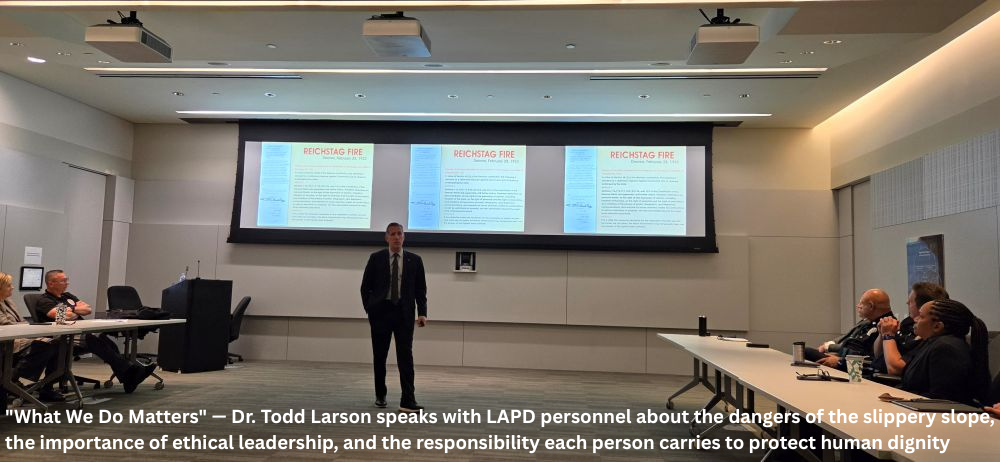
On June 3, 2026, I had the privilege of attending a remarkable presentation at the Los Angeles Police Department Headquarters led by Dr. Todd Larson, Ed.D., MSL, FABC, Director of the What You Do Matters Institute.
As a chaplain serving multiple law enforcement and federal agencies, I have attended countless leadership seminars, ethics courses, and professional development programs. Few have left the kind of impression this presentation did.
At first glance, one might assume that a presentation titled Lessons from the Holocaust for Today's Leaders would primarily be about history.
It wasn't.
It was about people.
It was about leadership.
It was about institutions.
It was about ethics.
And perhaps most importantly, it was about the responsibility each of us carries every day, often through decisions that seem small and insignificant at the time.
The presentation revolved around a simple but haunting question:
How did police officers, whose mission was to protect their communities, become participants in one of history's greatest atrocities?
The answer is not as simple as many people imagine.
And that answer has important lessons for every leader today.
The Question That Started It All
The origins of the What You Do Matters program are fascinating.
Dr. Larson explained that decades ago, a law enforcement leader visited the United States Holocaust Memorial Museum in Washington, D.C. Like many visitors, he was deeply moved by the exhibits. Yet one thing continued to trouble him long after he left.
As he walked through the museum, he noticed something he had never fully appreciated before.
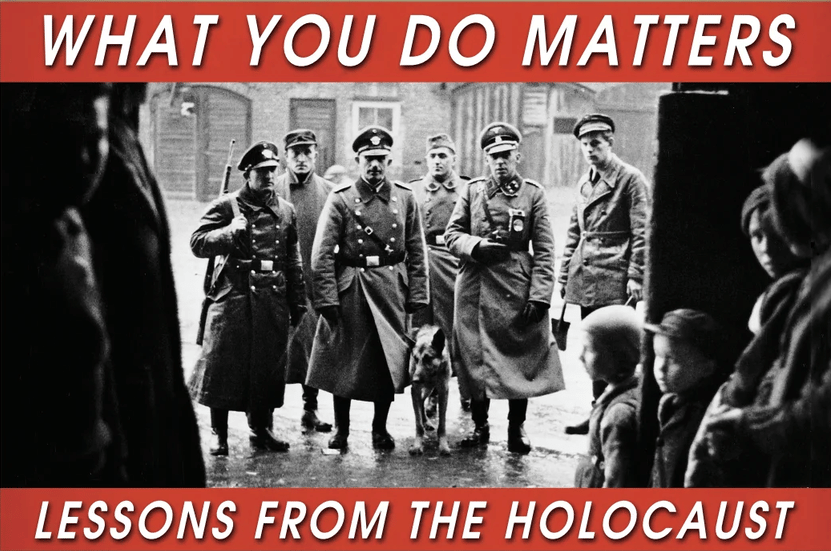
Many of the men standing in the photographs were not soldiers.
They were police officers.
The image stayed with him.
The following day, he returned to the museum and posed a question to the historians:
"How does the Holocaust happen when police are on duty?"
After all, isn't the role of law enforcement to protect citizens?
How could officers entrusted with public safety become involved in persecution, deportation, and ultimately mass murder?
The museum's historians offered an honest response:
"We don't know. But that's a question worth studying."
That question led to a decades-long collaboration between law enforcement professionals and Holocaust scholars that eventually became the What You Do Matters Institute.
Today, the program has been presented to thousands of police officers, prosecutors, judges, and public servants across the United States.
What makes the program unique is that it does not attempt to teach history for history's sake.
Instead, it uses history as a case study in ethical leadership.
The Greatest Misunderstanding
One of the most important lessons from the presentation was also one of the most misunderstood.
Many people imagine that Nazi Germany emerged suddenly.
They picture Hitler taking power and immediately launching the horrors that would later define the Holocaust.
History tells a different story.
The Holocaust did not begin with concentration camps.
It did not begin with gas chambers.
It did not begin with mass murder.
It began with a series of small steps.
One decision.
One law.
One compromise.
One exception.
One rationalization.
Then another.
And another.
And another.
The presentation walked attendees through the social and political conditions that existed in Germany after World War I.
The nation was devastated.
Millions had died.
The economy was collapsing.
Unemployment was rampant.
Political violence was common.
People were angry, fearful, and desperate for solutions.
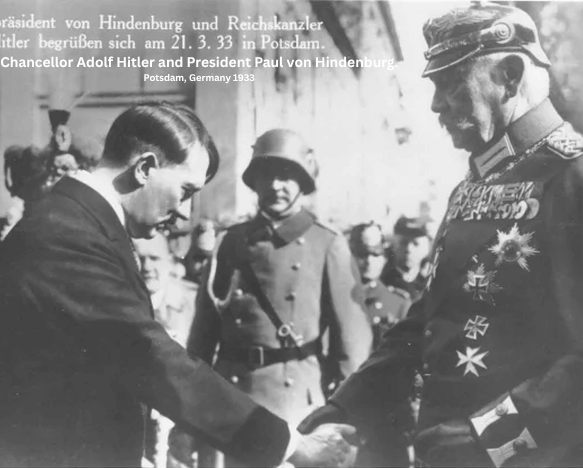
In that environment, Adolf Hitler and the Nazi Party offered simple answers to complicated problems.
Interestingly, Hitler never won a majority of the popular vote.
Instead, he was appointed Chancellor by political leaders who believed they could control him.
History proved otherwise.
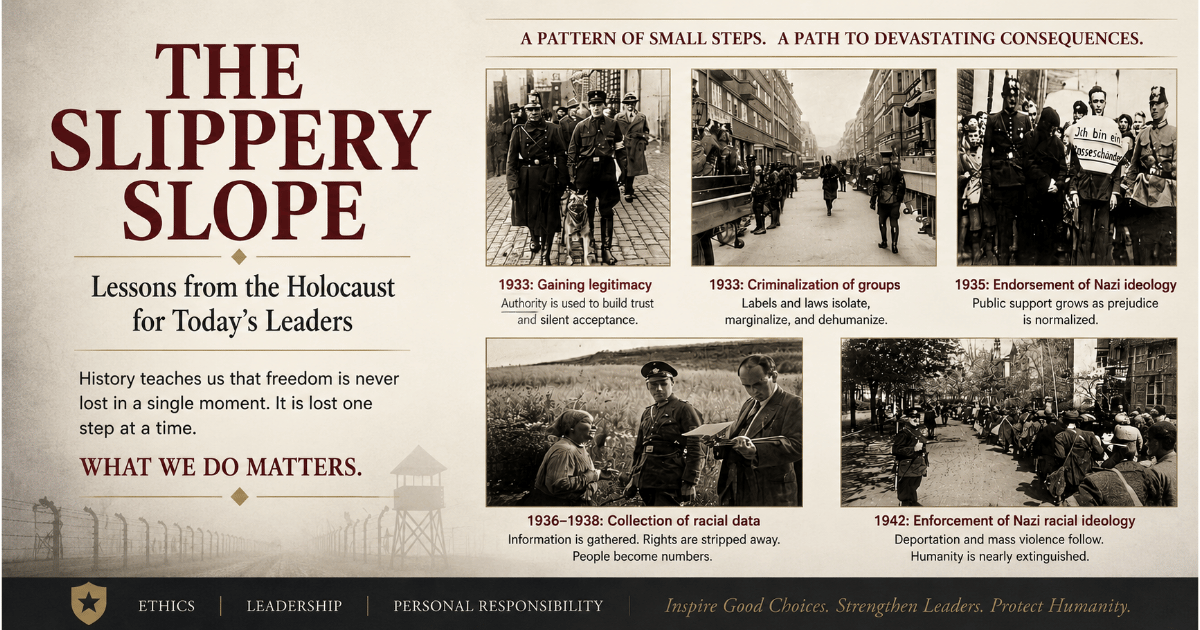
The Slippery Slope
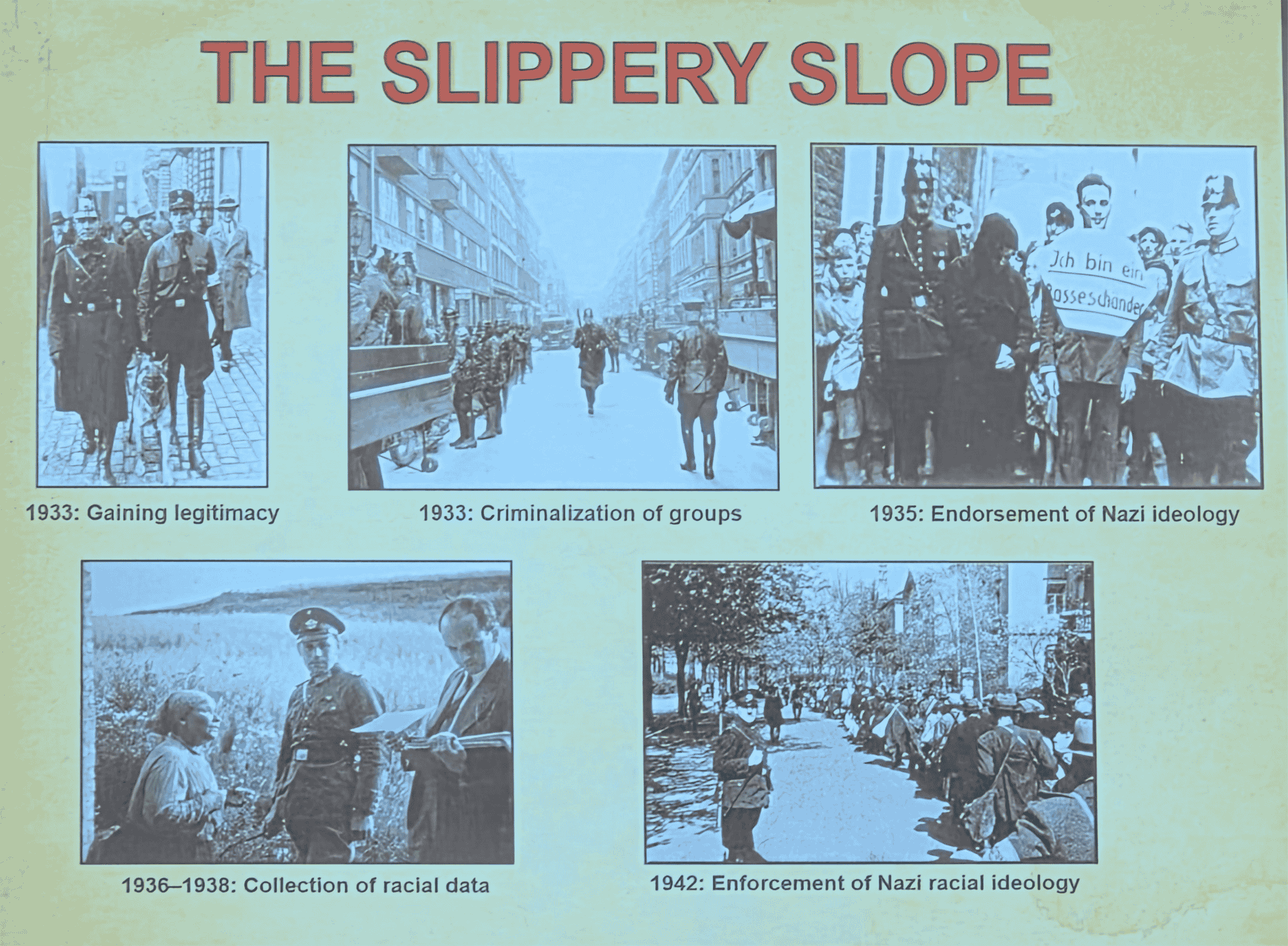
One of the strongest themes of the day was the danger of what Dr. Larson repeatedly described as the "slippery slope."
Most societies do not lose freedom overnight.
Most institutions do not suddenly abandon their values.
The process is usually gradual.
After the Reichstag Fire in 1933, emergency powers were enacted.
Citizens were told the measures were necessary for public safety.
Civil liberties were suspended.
Political opponents were arrested.
Government authority expanded.
Courts declined to intervene.
New laws began appearing one after another.
Initially, these laws affected only small segments of society.
Jewish doctors were removed from public positions.
Jewish lawyers were excluded from practice.
Jewish citizens were restricted from government employment.
Student quotas were imposed.
Citizenship rights were revoked.
Each action could be explained.
Each action could be justified.
Each action could be rationalized.
Yet when viewed collectively, they represented something much larger.
A democracy was being dismantled piece by piece.
What made this section particularly powerful was the realization that very few people would have accepted the final outcome had it been proposed at the beginning.
Instead, they accepted one step at a time.
The lesson applies far beyond Germany.
History repeatedly demonstrates that dangerous outcomes are often reached gradually rather than suddenly.
Why the Police Mattered
One of the most thought-provoking portions of the presentation explored why the Nazis did not simply replace local police departments.
The answer reveals something important about the nature of public trust.
Police officers possess unique forms of authority.
They possess legitimacy.
They possess local knowledge.
They possess community relationships.
They possess professional credibility.
Most importantly, they possess public trust.
The Nazi regime understood that replacing local police would risk losing those advantages.
Instead, they augmented existing departments with Nazi personnel and gradually redirected police resources toward political and ideological goals.
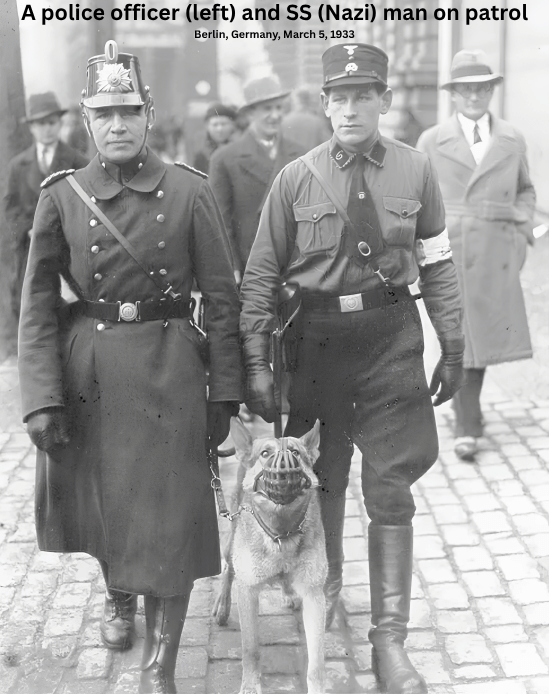
Officers who once protected citizens found themselves carrying out new directives.
At first, those directives appeared legitimate.
Crime suppression initiatives.
Neighborhood searches.
Public order operations.
Routine enforcement actions.
But gradually the mission changed.
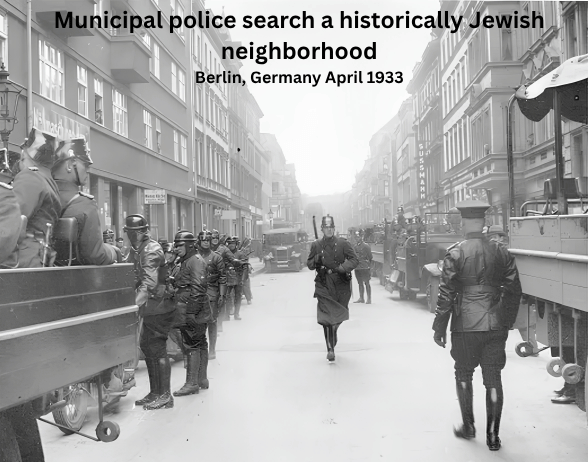
The presentation included photographs showing large police operations concentrated in Jewish neighborhoods.
To the public, those images communicated a message.
When people repeatedly see police activity in a particular community, assumptions begin to form.
The community becomes associated with criminality.
Fear replaces familiarity.
Suspicion replaces trust.
The lesson was profound.
Authority does not merely exercise power.
Authority shapes perception.
The Power of Presence
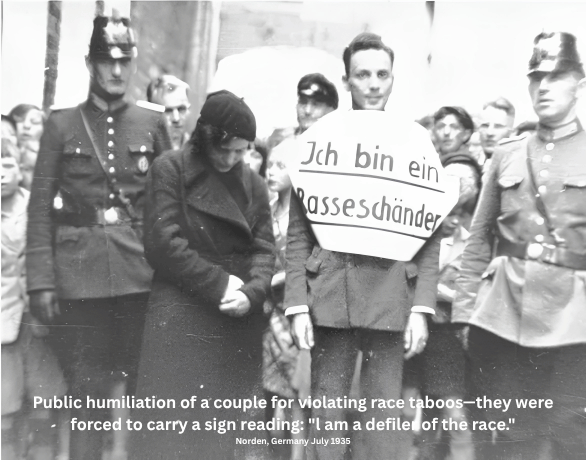
One photograph discussed during the presentation showed police officers standing near the public humiliation of a Jewish man and his fiancée.
The officers were not actively participating in the humiliation.
They were simply present.
Yet their presence communicated something.
To onlookers, it suggested approval.
To victims, it suggested abandonment.
To the broader community, it suggested legitimacy.
This led to one of the most important observations of the day:
People often interpret the presence of authority as endorsement.
That lesson remains relevant today.
Whether in law enforcement, government, education, business, or religious leadership, our presence sends messages.
Sometimes intentionally.
Sometimes unintentionally.
Either way, people are watching.
The Role of Fear
Another important theme involved fear.
Germany in the early 1930s was suffering from economic collapse.
Government jobs were highly valued.
Police officers understood that refusing orders could threaten their livelihoods.
Many had families to support.
Many feared unemployment.
Many feared becoming targets themselves.
It is easy to judge historical decisions from the safety of hindsight.
It is far more difficult to place ourselves in the uncertainty that people experienced at the time.
Dr. Larson encouraged participants not to excuse bad decisions but to understand the pressures that contributed to them.
Only then can we recognize similar pressures when they arise in our own lives.
The Importance of Moral Agency
Perhaps the most encouraging lesson of the day came from historical research regarding police participation in atrocities.
Many people assume officers had no choice.
The reality was more complicated.
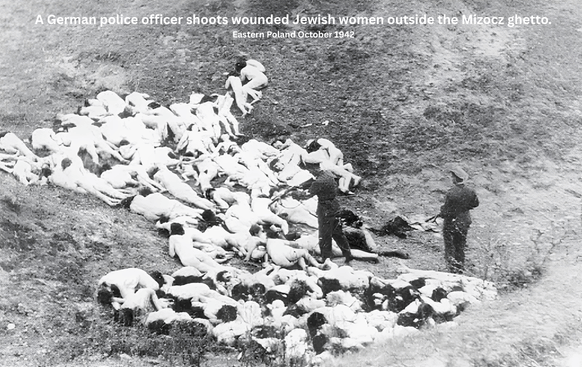
Research discussed during the presentation found that while some officers volunteered for participation in killing operations, others refused.
What is remarkable is that those who refused were often reassigned rather than punished.
That fact challenges one of the most common assumptions about the Holocaust.
It demonstrates that moral choice remained possible.
Even within deeply corrupt systems.
Even under immense pressure.
Even when conformity appeared easier.
The lesson is timeless.
Leadership is not measured only when choices are easy.
Leadership is revealed when choices are difficult.
Why This Matters Beyond Law Enforcement
Although the audience consisted primarily of law enforcement professionals, the lessons extend far beyond policing.
Teachers influence young minds.
Clergy influence values.
Business leaders influence culture.
Judges influence justice.
Parents influence future generations.
Every position of influence carries responsibility.
The Holocaust did not occur because a handful of extremists acted alone.
It occurred because countless ordinary people made countless ordinary decisions.
Some remained silent.
Some looked away.
Some convinced themselves that their actions did not matter.
History proved otherwise.
The title of the program captures this truth perfectly.
What You Do Matters.
Not only the major decisions.
The small ones.
Not only the public actions.
The private ones.
Not only the moments that make headlines.
The moments nobody sees.
A Lesson in Human Dignity
The most emotional portion of the presentation involved Holocaust survivor Gerda Weissmann Klein (May 8, 1924 – April 3, 2022).
After enduring years of unimaginable suffering, imprisonment, and dehumanization, she described the moment she began to feel human again.
It was not because of a political speech.
It was not because of military victory.
It was not because someone rescued her dramatically.
It was because an American soldier held a door open for her and respectfully addressed her as "lady."
After years of being treated as less than human, that simple act restored a measure of dignity.
The story was deeply moving.
It also reinforced a profound truth.
Small actions matter.
The way we speak to people matters.
The way we treat people matters.
The way we exercise authority matters.
The way we acknowledge another person's humanity matters.
Far more than we often realize.
A Personal Reflection
During the presentation, participants were asked to reflect on two questions:
Why do you do this work?
And what is your role in the community?
The answers around the room were inspiring.
To make a difference.
To stop suffering.
To protect and serve.
To stand up to bullies.
To build trust.
To educate.
To partner with the community.
When my turn came, I reflected on my role as a chaplain.
I shared that I am here to serve those who protect and serve.
That statement felt even more meaningful by the end of the program.
Whether we wear a badge, a uniform, a clergy collar, or no uniform at all, our actions affect others.
Every interaction leaves an impression.
Every decision communicates values.
Every act of respect strengthens human dignity.
And every compromise, however small, has consequences.
What We Do Matters
History is often studied through dates, wars, and political events.
But history is ultimately about people.
The presentation reminded us that societies are shaped by everyday choices.
The choice to speak.
The choice to remain silent.
The choice to stand up.
The choice to look away.
The choice to treat another human being with dignity.
The Holocaust remains one of humanity's darkest chapters.
Yet within that darkness are lessons that continue to illuminate our path forward.
For law enforcement officers.
For chaplains.
For public servants.
For community leaders.
For all of us.
The lesson is both simple and profound:
What we do matters.
Every day.
Every interaction.
Every choice.
And every life we touch.